Luxury Railings
- Brass Handrails and Fittings by Grande Forge
- Cast Iron Series by Grande Forge
- Mozart Series by Grande Forge
- Black Diamond Series by Grande Forge
- Paris Series by Grande Forge
- Diamond Series by Grande Forge
- Modern Series by Grande Forge
- Comtesse Series by Grande Forge
- Classic Series by Grande Forge
- Harmonie Series by Grande Forge
- Versailles Series by Grande Forge
- Royal Series by Grande Forge
- Carbone Series by Grande Forge
- Square Series by Grande Forge
- Black Series by Grande Forge
 Iron & Steel Railings
- Steel Handrail and Fittings
- Decorative Flat Bars & Ends
- Pipe Fittings
- Textured Bars
- Twisted Bars
- Hot Pierced Bars
- Bamboo-Forged Steel
- Plain Steel Bars
- Half Oval and Half Round Bar
- Collar Material
- Handrail & Side Mount Brackets
- Railing Posts
- Grande Forge Balusters/Pickets
- Railing Balusters/Pickets
- Regency Railings
- House of Forgings
- Decorative Railing Panels
- Wire Mesh Panels & U-edging
 Ornamental Metals
- Post Tops / Finials / Railheads
- Decorative Collars
- Railing Shoes and Cover Plates
- Cross Bars for Window Guards
- Rosettes
- Forged Steel Scrolls
- Leaves, Roses & Grapes
- Solid and Hollow Balls
- Rings and Circles
- Other Decorative Elements
- Home Decor
- Flower Panels
- Decorative Castings by Grande Forge
- Ornamental Iron Castings
- Gate Crowns and Top Scroll Panels
- Gate Frame Accessories
 Aluminum Railings
- Aluminum Handrail and Fittings
- Aluminum Tubing, Textured and Plain Bar
- Aluminum Pipe Fittings
- Aluminum Ball Fittings
- Aluminum Balusters and Posts
- Aluminum Scroll Panels
- Aluminum Leaves
- Aluminum Infill Castings
- Aluminum Rosettes
- Aluminum Railheads/Finials
- Aluminum Rings, Circles and Balls
- Aluminum Cages
- Aluminum Scrolls
- Aluminum Picket Castings
- Aluminum Cover Plates, Flanges, Shoes & Base Plates
- Aluminum Collars
- Aluminum Post Caps
- Aluminum Handrail Brackets
 Stainless, Cable & Glass Railing
- CableRail by Feeney
- Ultra-tec Cable Railing Infill
- Glass Railing Systems
- Linear Light by Q-railing
- Q-Line 1.5" Round Post System
- Q-Line 1.9" Round Post System
- Glass Clamps
- Glass Adapters
- INOX Round Stainless Steel Railing System
- INOX Square Stainless Steel Railing System
- Woodinox Railing System
- LED System for Stainless Steel Railing
- 1-1/2" Round Stainless Steel Railing System
- 2" Round Stainless Steel Railing System
- Stainless Steel Handrail Brackets
- Installation/Maintenance Accessories
 Brass Railings
 Paints and Patinas
 Gate Hardware
 Sliding Gate and Door Systems
 Gate Automation
 Miscellaneous and Defective Items
- All Categories
Exploring Sculpt Nouveau Patinas and Metal Finishes: A Hands-On Workshop at AIDI
December 04, 2025
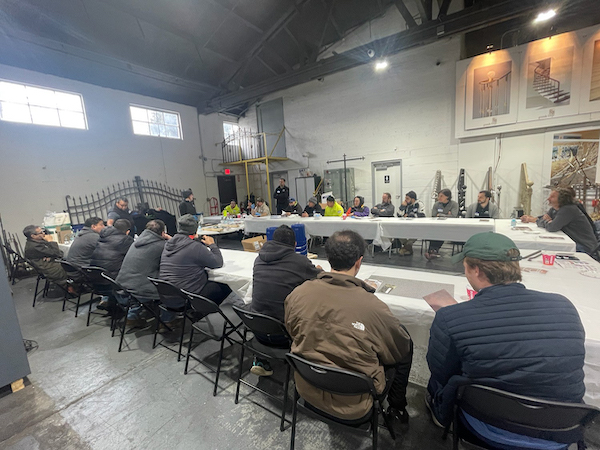
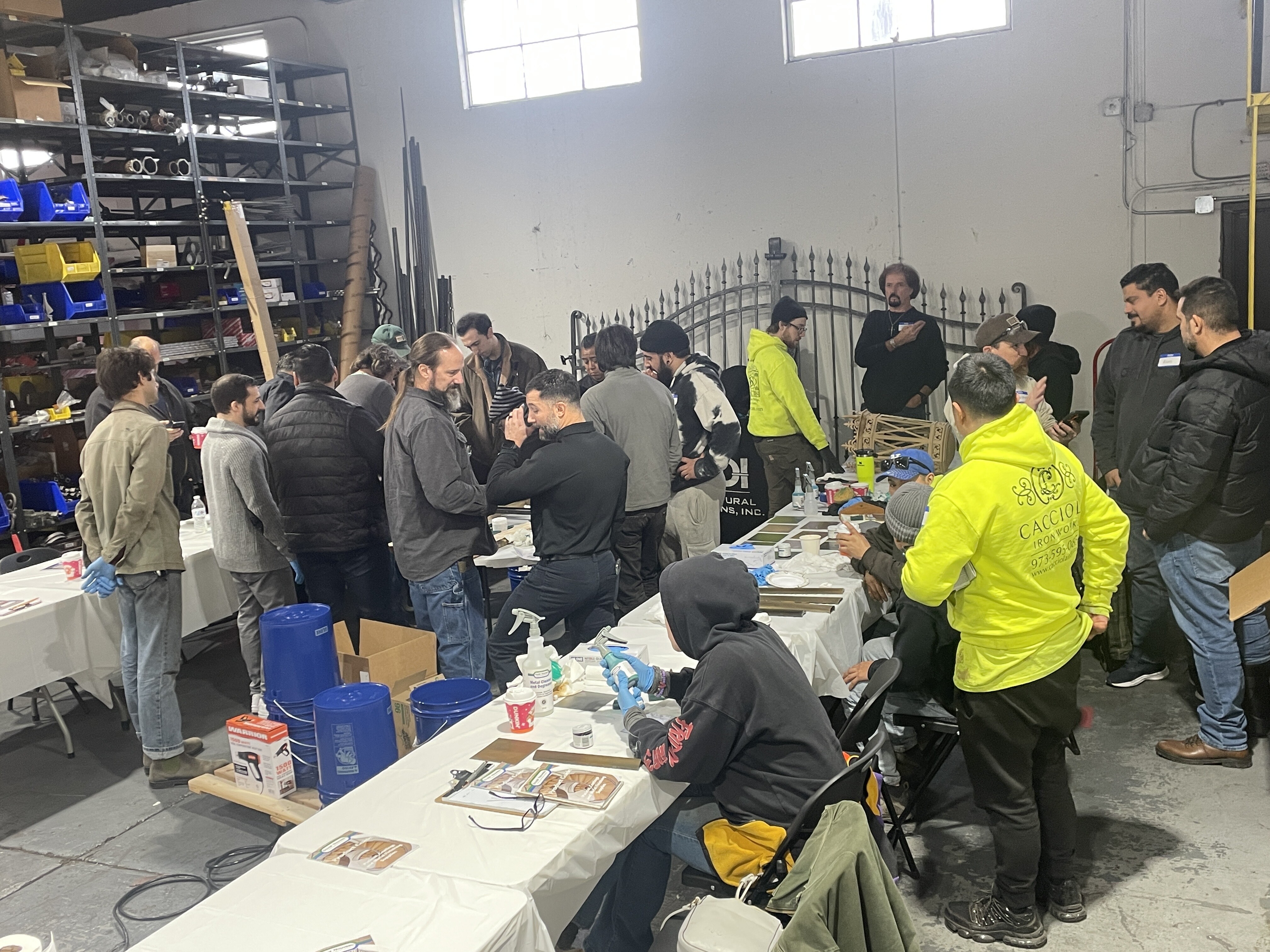
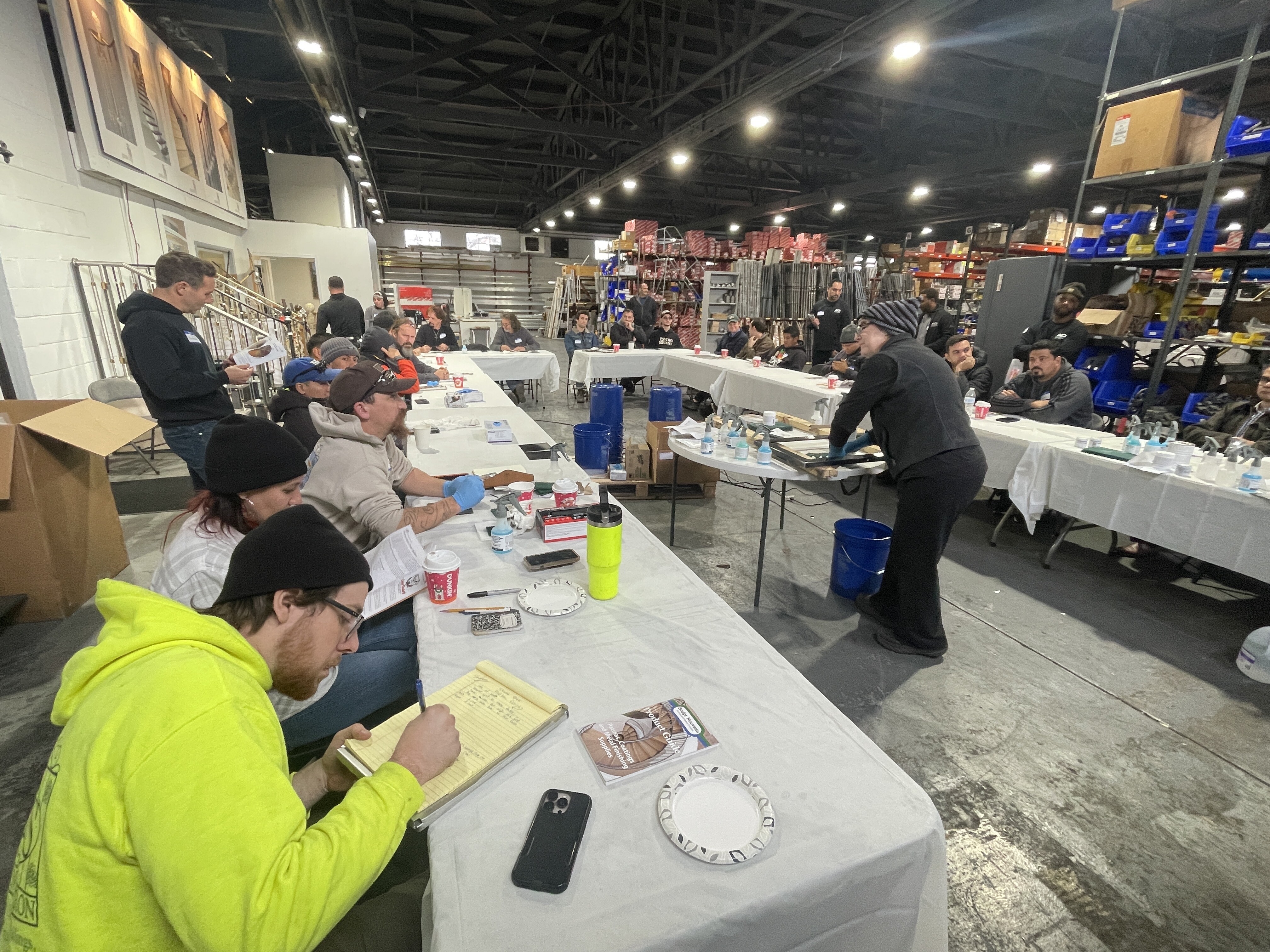
The primary focus of the workshop was the use of chemical patinas and metal finishes across several commonly used materials, including steel, stainless steel, copper, and brass. Attendees were able to see how the same patina reacts differently depending on the base metal, surface preparation, application method, and dwell time. In some cases, Tracey demonstrated how heating the surface can significantly affect color development and character — an essential consideration for fabricators producing decorative panels or architectural metal features that demand visual depth.
At Architectural Iron Designs, we work every day with professionals who understand that finish matters just as much as fabrication. A piece can be beautifully built, structurally sound, and perfectly installed — but the wrong finish, or a poorly executed one, can undermine the entire result.
That’s why AIDI recently hosted a hands-on workshop featuring products from Sculpt Nouveau, a leading brand of patinas and metal finishes. The goal of the workshop was to give metal fabricators and artisans the opportunity to explore techniques, materials, and real-world applications together.
The session took place at AIDI headquarters and brought together more than 25 attendees from as far away as Central Pennsylvania, representing a wide range of disciplines within architectural, decorative, and custom metalwork. Some were seasoned fabricators with years of finishing experience. Others were newer to patinas and looking to build confidence and understanding. Both groups benefitted from seeing the process in action — and from being able to ask an expert practical, job-site-driven questions.
The workshop was led by Tracey Stakelin, MFA, principal and founder of Delform Metal Fabrication in Rutherford, New Jersey. With more than twenty-five years of experience working across metal, concrete, and stone, Tracey brought both technical expertise and an artisan’s perspective to the session. Her approach emphasized experimentation, observation, and intention — key elements in achieving consistent, repeatable results with patinas.
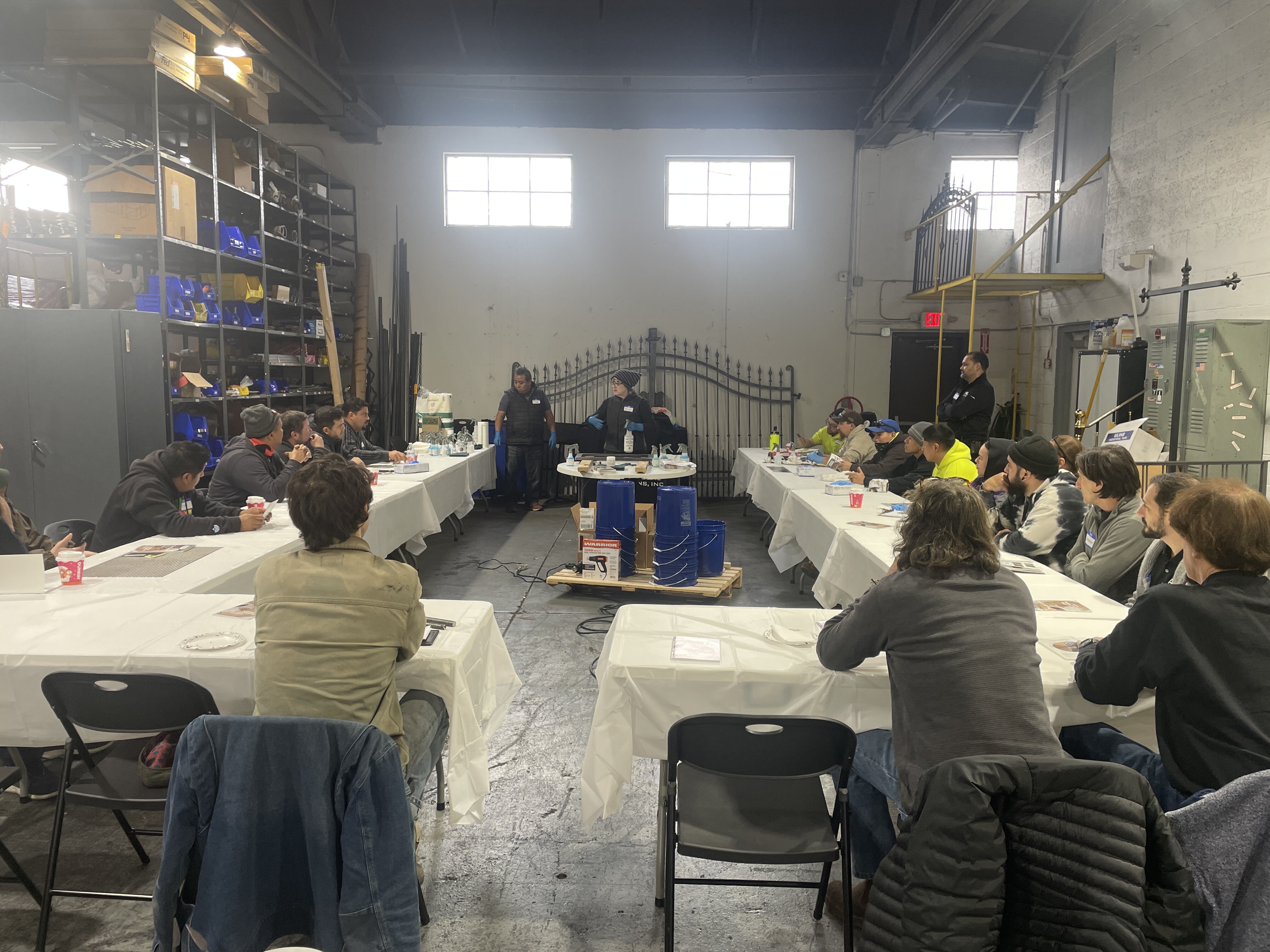
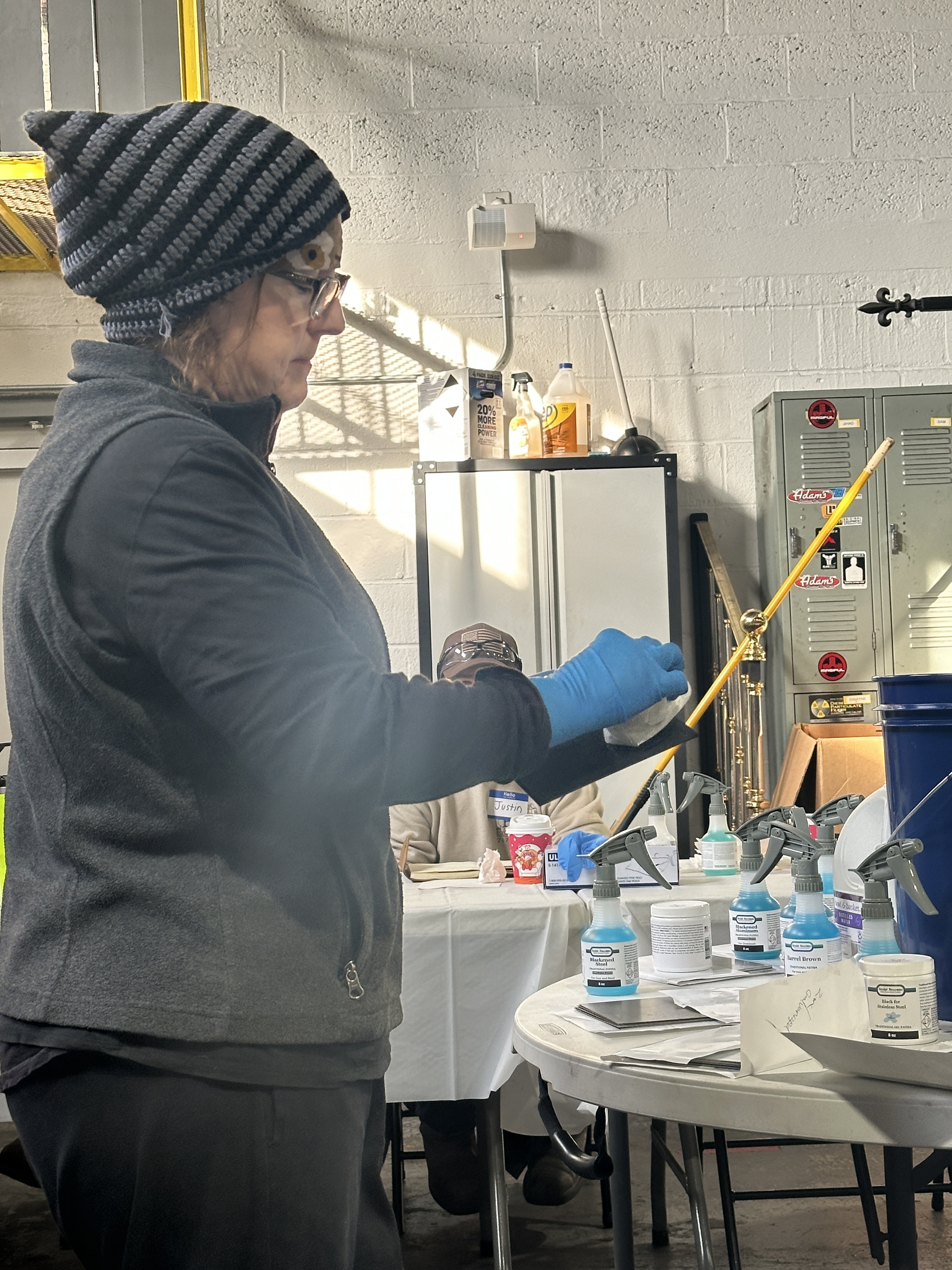
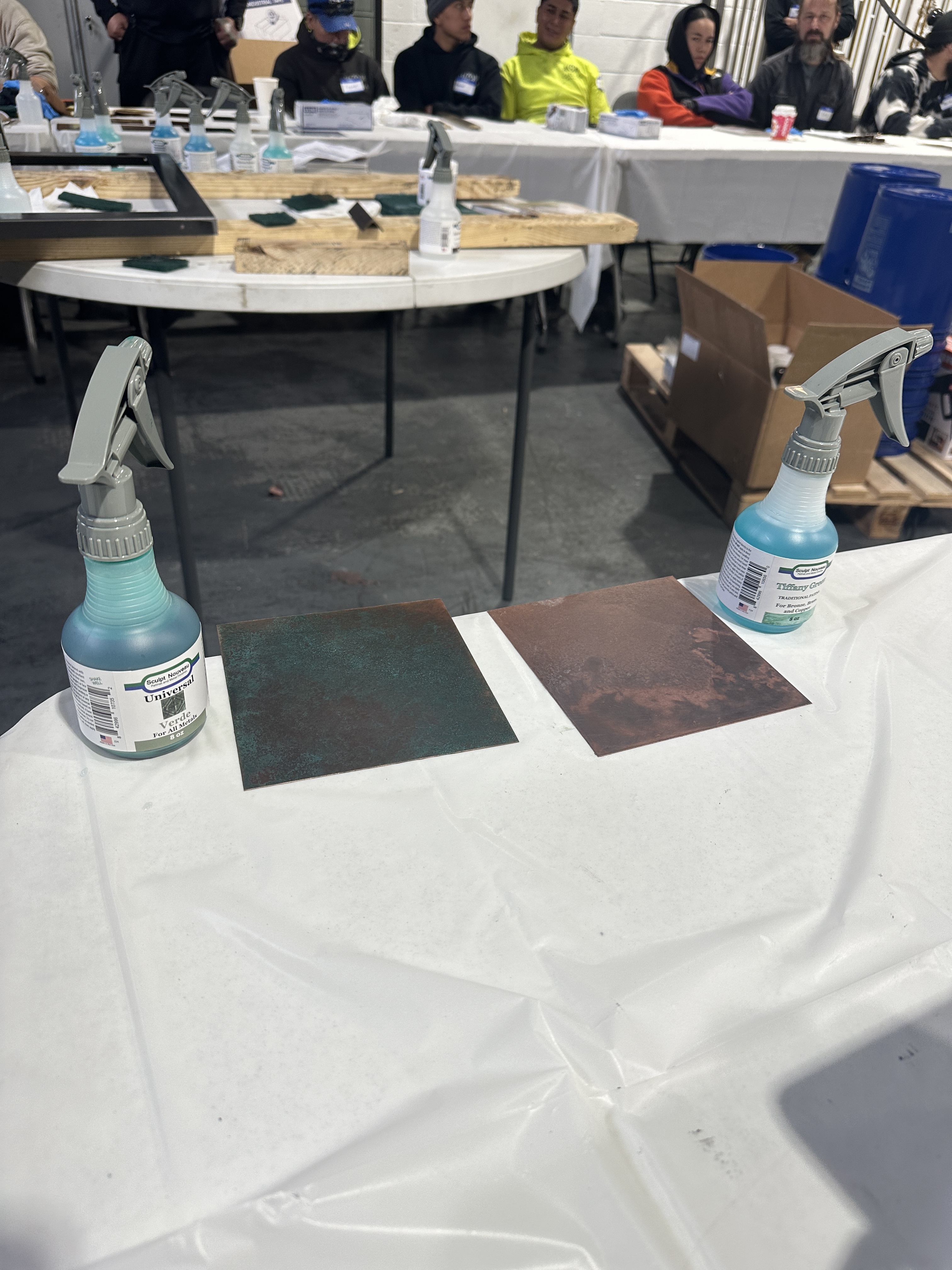
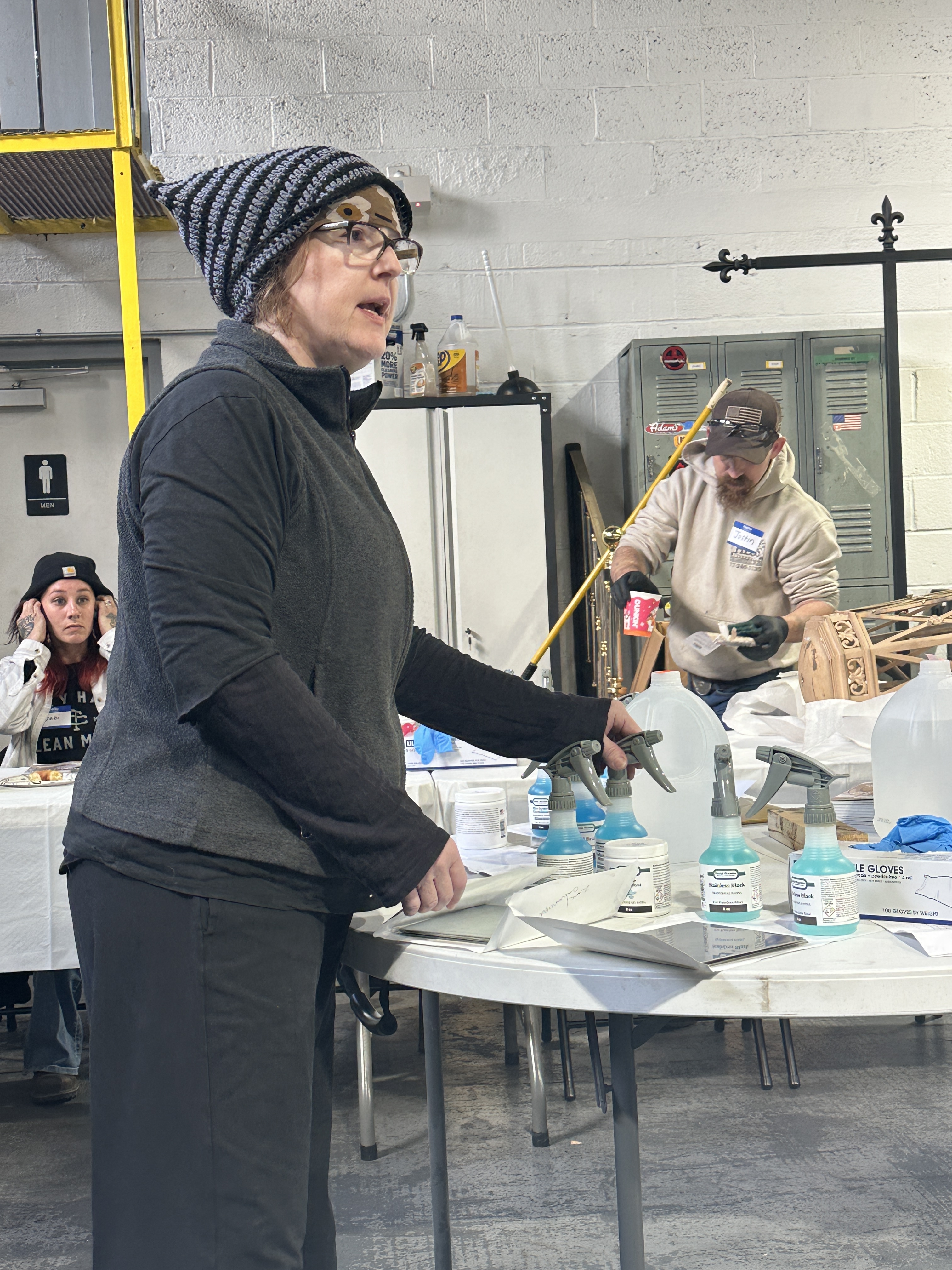
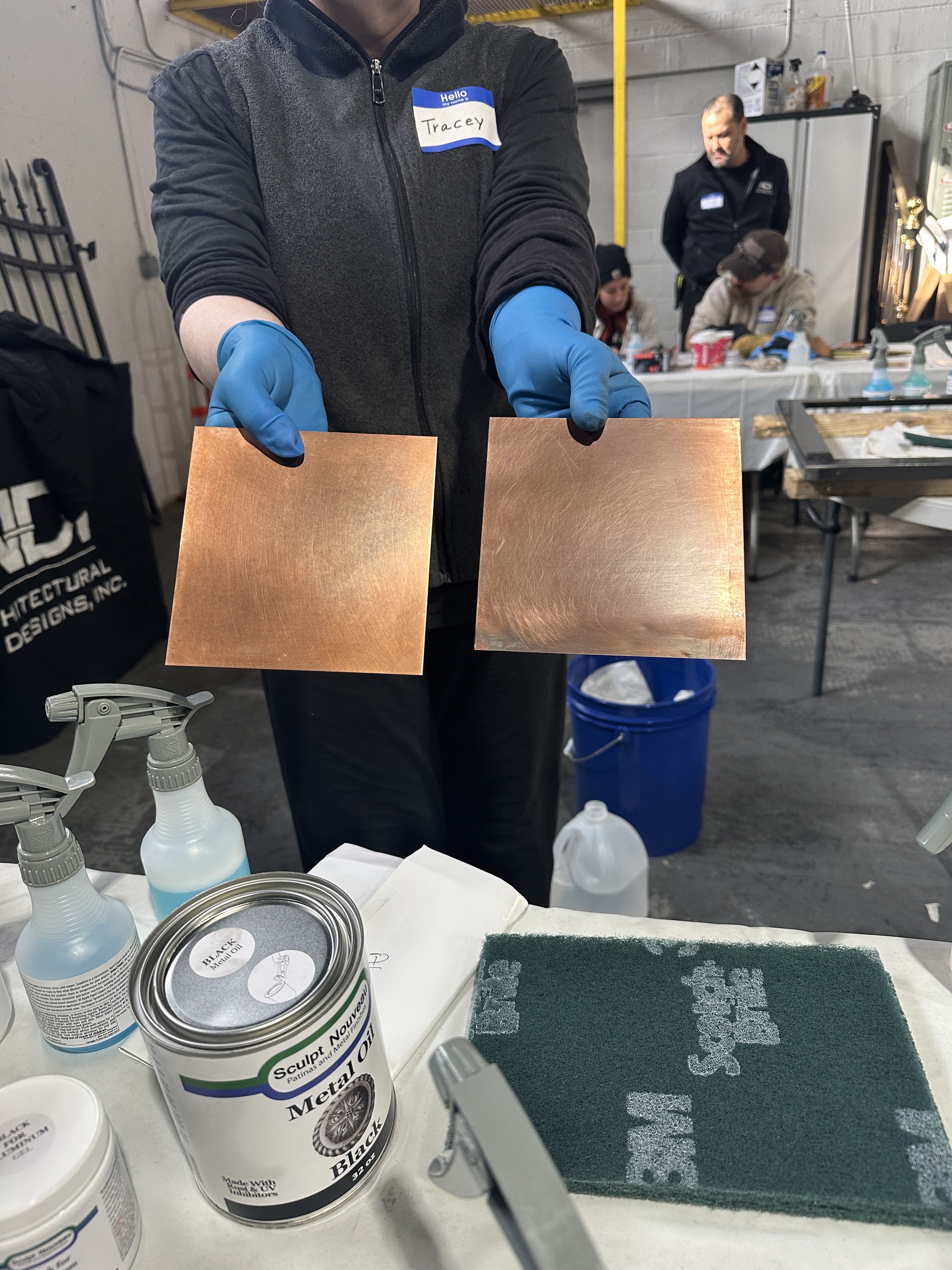
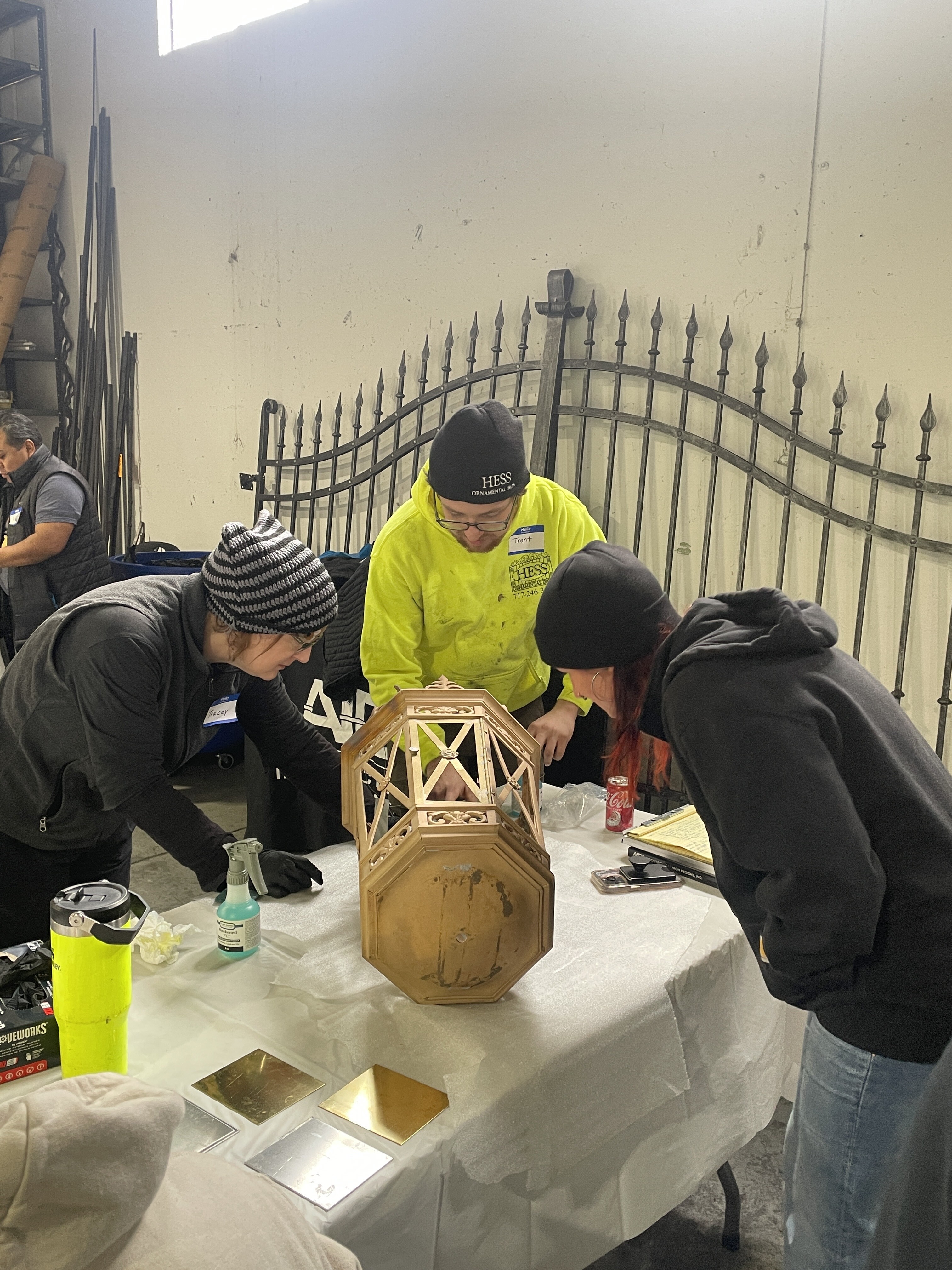
Throughout the session, surface preparation was emphasized as a critical step that should never be treated as an afterthought. Proper cleaning ensures the intended chemical reaction occurs and that finishes adhere as expected. Attendees watched as Stakelin and an assistant cleaned and degreased sample pieces, often using Sculpt Nouveau’s Metal Cleaner and Degreaser worked in with an abrasive pad to remove residue, mill scale, or oils left from fabrication. In some cases, acetone or denatured alcohol was used to remove moisture after patina application, helping to control the final result.
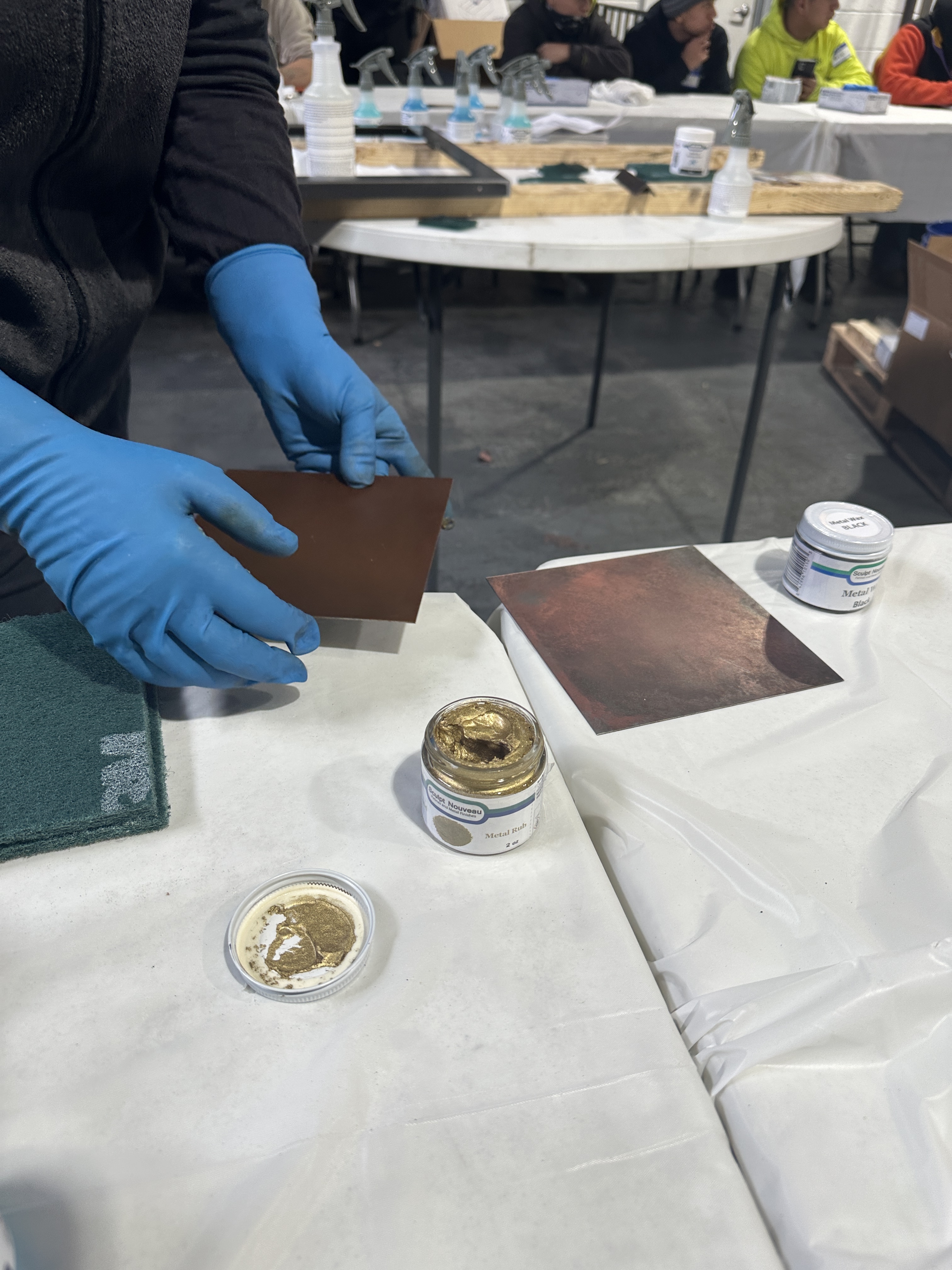
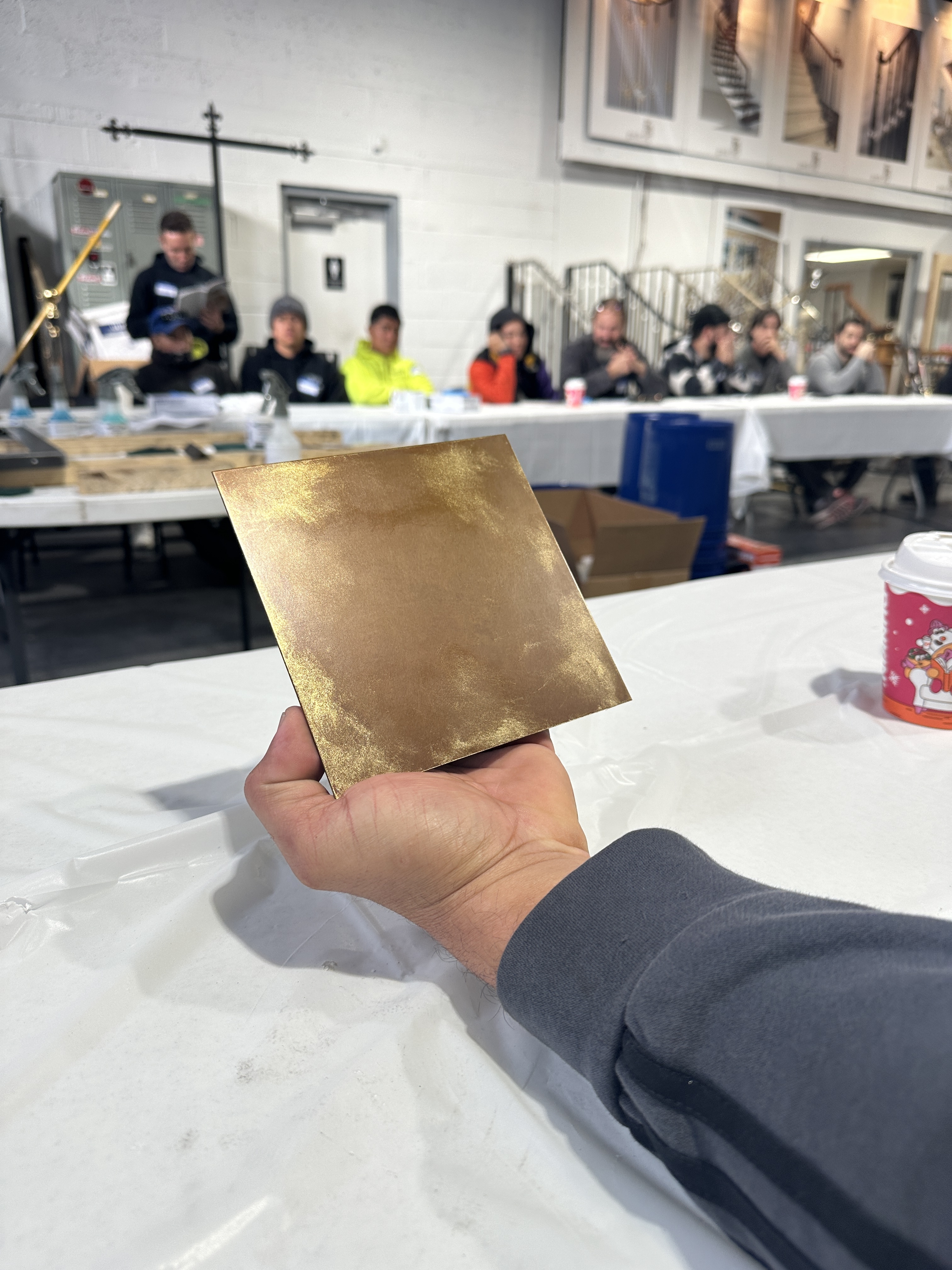
One of the most valuable takeaways for many participants was seeing how a single patina can produce a range of finishes. Rag application versus spraying, fast reactions versus slower builds, and selective treatments versus full coverage all resulted in distinct outcomes. For metal fabricators producing custom decorative work — or metal artists creating one-off architectural elements — this flexibility opens up creative possibilities without requiring entirely different products.
Sealing and protection were also discussed in detail. Once a desired patina effect is achieved, the finish must be sealed appropriately for its intended use. Tracey walked through the decision-making process around wax versus lacquer; explaining how environment, wear, and desired look should guide the choice. For example, architectural metals designed for frequent contact — such as doors, railings, and other touchpoints — often require a more durable lacquer, while static decorative metals may benefit from wax coatings that allow for easier maintenance and touch-ups in the future. The use of tinted or colored waxes to add nuance and depth over patinated surfaces was also demonstrated.
The workshop was intentionally interactive. Attendees were invited to test patinas themselves on provided samples, with Tracey offering guidance and troubleshooting in real time. Several participants even brought their own project pieces to workshop on site, including a newly fabricated hot-rolled steel frame and a century-old lantern from the Hershey Theatre. These real-world pieces sparked valuable discussion around restoration, finish matching, and balancing authenticity with durability.
At the conclusion of the session, AIDI President Jay Shah reflected on the value of demystifying the finishing process. Removing the fear around patinas—while also highlighting that there is rarely a single “correct” way to achieve a result—was a consistent theme throughout the day. He also expressed gratitude to Deborah Young, the owner of Sculpt Nouveau, for her partnership.
Workshops like this reflect AIDI’s ongoing commitment to supporting the professionals we serve. Beyond supplying architectural metals, decorative panels, and specialized components, our goal is to provide insight, access, and shared knowledge that help skilled tradespeople do their best work.
If you’re interested in attending a future demonstration or training session focused on metal finishes, patinas, or related techniques, we encourage you to reach out to us at aisales@archirondesign.com. We’re always glad to help you explore what’s possible—and to support the work you’re building next.
Recent Posts